We have a fresh new look! What do you think? Tell us here.
 | |||||||||||||||||
The Best Summer SnacksWe've all heard the old saying "the devil is in the details." For diet planning with diabetes, those details are the snacks between meals. Those seemingly innocent handfuls of goodies can tilt your blood sugar, unbalance your calorie intake, and wreck your waistline. You don't need to abstain from snacks, just look for some low-calorie, low-GL options. In fact, your blood sugar will remain much more constant if you smartly snack between meals. This summer, try these four snacks on for size—and you may find yourself dropping a size or two. Low-fat mozzarella sticks. Snacks low in carbs and moderate in fat are rare, indeed. But these sticks fit the bill. They're a bit pricier than buying blocks of cheese, but the one-ounce, single-serving packaging is worth the nutritional investment. No-salt almonds. Researchers have found that those who eat nuts about five times a week were 20 percent less likely to develop type 2 diabetes than those who didn't. Nuts blend protein and good fats, and almonds are an excellent source of vitamin E, an antioxidant that may protect against kidney damage and eye and nerve complications. Low-fat frozen fudge bars. Cool off and get your ice cream and chocolate fix all at once. These bars are lower in carbs, fat, and calories than many similar summery treats. Look for ones with less than 100 calories and one gram of fat each. Granola bars. A good on-the-go snack whether you're hiking on a trail or driving on vacation, granola bars provide a pick-me-up boost of energy. But (and this is a big but) you have to check the labels. Some granola bars have so much sugar and fat, they should be in the candy aisle. Look for bars with no more than 150 calories and at least five grams of protein.
Serves 4 Ingredients: Preparation: Per serving (two rolls): 225 cal, 5 g fat (2 g sat), 15 g carbs, 29 g protein, 4 g fiber, 127 mg chol, 854 mg sodium
Discover the Healthier Side of Chinese Cuisine Opt for brown rice. Many restaurants give you the option, and at home, you should have already purged the higher-GL white stuff from your shelf. Remember, white rice is a blood-sugar disaster waiting to happen. And don't eat the whole bowl or container of rice. Spoon a half-cup onto your plate and leave the rest. Or do as a native Chinese would: Put a small amount in a small bowl and hold the bowl up, using your chopsticks (or fork) to eat a little rice in between bites of your main dish. Or be bold and don't eat any rice at all. Start with soup. Order or make wonton or egg drop soup to begin your Asian dining experience. This will take the edge off your hunger without a lot of calories (but avoid soups with coconut milk). If you want a ravioli-type appetizer, order steamed vegetable dumplings, not fried. Steam ahead. Fried or steamed? That's the question for making or ordering almost any Chinese dish. Always, always, always go for steamed. Good entrées include steamed chicken and vegetables and moo goo gai pan—chicken with mushrooms. Make a request. When ordering, ask the waitperson to have your food prepared with less oil and more veggies, and get the sauce on the side. Dab just a little bit of the sauce on each bite instead of having it slathered all over your meal. Pile on the veggies. If you really want to make the meal healthier, opt for a plate of steamed vegetables and add them to other dishes. Or ask for sautéed vegetables or Szechuan-style string beans. Go big for bean curd (tofu). Ordering family-style? Include a heart-healthy, low-fat dish like bean curd with sautéed Chinese mixed vegetables (like other dishes, not deep-fried). Plan on leftovers. Portions are often large. Think of about one cup of a dish (without rice) as a serving. And ask for a take-out container right away, so you can store the rest out of sight. |
| ||||||||||||||||
| |||||||||||||||||



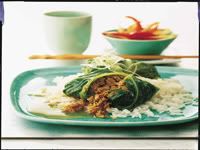 Asian Pork & Cabbage Rolls




 Prevent & even undo cardiovascular disease.

0 comentarios:
Publicar un comentario