martes, 28 de junio de 2011

Amazingly Healthy Food Swaps

Diabetes Newsletter
We have a fresh new look! What do you think? Tell us here.

 
Twitter facebook Sign-Up Tuesday June 28, 2011

Amazingly Healthy Food Swaps

You can easily tell the health-oriented food shoppers. They're the ones reading the food labels on every box or bag they pick up at the store. More and more of us are doing this these days, and that's a great thing: Learning the amount of carbs, sugar, fats, protein, and sodium in the food you eat is just what you need to better manage your diabetes.

Sadly, one of the best measures of a food's impact on your blood sugar is nowhere to be found on food labels today. It's the Glycemic Load, and it indicates how much one serving of a particular food raises your blood sugar. Most no-carb foods, like beef, have a zero GL because eating it has no immediate effect on your blood sugar. A food with GL of 10 (such as 1/2 cup of orange juice) or less is considered low—and a good choice for avoiding blood-sugar swings. A measure of 11 to 19 is a medium-GL food; and those foods with a GL of 20 or higher should be viewed with caution and weighed carefully against other choices you make during your day.

What's the GL mean for meal planning? Keeping the GL in mind as you create a menu, can help you balance meals. You're less likely to experience energy ups and downs throughout the day and you stand a better change of shedding weight when monitoring your GL. Coordinating the GL of foods before and after exercise will also ensure that you'll make the most of your workouts.

GL measures for many foods are easily found online. The trick is to take a few moments as you do your meal planning to check out the GL levels of the foods you plan to include. If too many are above 10, consider making some swaps.

When using GL as a tool, be aware that the GL of any particular food is closely tied to portion size. If you have three or four servings of a low GL food, it won't help manage your blood sugar. So, no fudging on portion sizes (especially if it's fudge).

Here are some high GL foods and examples of low GL swaps.

Breads
Swap white bread    GL 22
For whole-grain pumpernickel    GL 10
Swap Middle Eastern flatbread    GL 30
For wheat tortillas    GL 6

Breakfast Cereals
Swap cornflakes    GL 24
For All-Bran    GL 9
Swap instant Cream of Wheat    GL 22
For oatmeal from rolled oats    GL 7

Beverages
Swap Coca-Cola    GL 24
For tomato juice    GL 4
Swap cranberry juice cocktail    GL 36
For unsweetened grapefruit juice    GL 7

Sweets
Swap Mar's Bar    GL 26
For M&Ms with peanuts    GL 6
Swap jelly beans    GL 22
For Nutella    GL 4

Vegetables
Swap French fries    GL 22
For raw carrots    GL 3
Swap baked russet potato    GL 26
For baked sweet potato    GL 17

Dried fruit
Swap raisins    GL 28
For grapes    GL 8
Swap dates    GL 25
For apricots    GL 9
 

Diabetes Recipes

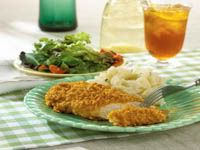
RecipeFried Chicken
Don't be shocked! This long-time favorite comfort food can actually be diabetes friendly. Swap the old deep-fried recipe for an oven-baked one without skin and with a lighter breading, and you'll still have that savory, crispy taste you love. 

Serves 6

Ingredients:
6 boneless skinless chicken breast halves (about 1 1/2 pounds)
Salt, to taste (optional)
Fresh-ground black pepper, to taste (optional)
1/4 cup fat-free milk
1 egg white, lightly beaten
1/2 cup cornflake crumbs

Preparation:
1    Preheat the oven to 400°F. Spray a baking sheet with cooking spray.
2    Rinse the chicken, pat dry, and season with the salt and pepper, if desired.
3    Combine the milk and egg white in a medium bowl. Place the cornflake crumbs in a shallow bowl or on a plate. Dip each chicken piece in the egg and milk, then roll in the cornflake crumbs until well coated.
4    Arrange the chicken pieces in a single layer on the baking sheet. Spray the tops with cooking spray and bake until brown and crisp, 20 to 30 minutes.

Tip of the Week

Excuse-Proof Your Outdoor Exercise

To relive your childhood, you have to do one, simple thing: Open the door and go outside. Once you're connected to the outdoors, you'll rediscover your sense of playfulness. Before you know it, you're moving your body, exercising without even thinking about it, and just plain having fun.

Too many of us are cooped up indoors all day and all night, except for when we go to and from our cars. Compare that with how much time we spent outside as kids. Mom had to literally drag us in sometimes, right? For your health and wellness, it's time to return to that part of your childhood. Start with a goal of being outside at least two hours a day. It doesn't have to be all at once, but over a week you can sneak outside for 15 minutes here and there, and it'll add up. Outdoor time will help you break the grip of the indoor disease.

To make stepping outside easier, here's how to hurdle over three typical excuses. See you on the other side of the door!

Excuse #1: I only have a few minutes; no time to do anything outside.
The way outside: Pour your coffee into a travel mug and wander around your backyard or around the block. You don't have to go on an expedition, just step out for 5 or 10 minutes.

Excuse #2: It always takes too long to get ready to take a bike ride or find my sports equipment.
The way outside: The evening before, set out clothes and any gear you'll need, like your bike helmet. If it's all handy when you wake up, you're more likely to suit up and go.

Excuse #3: It's raining. It's pouring. I'd rather be snoring.
The way outside: Take a cue from golfers and open up one of those huge golf-style umbrellas, go for a walk, and enjoy the outdoors. You'll be surprised how relaxing and sensual the sound and feel of walking in the rain can be. 


Until next issue, here's to good health!
Neil Wertheimer
Editor in Chief, Reverse Diabetes


Advertisement


Reverse Diabetes Magic Foods
Foods, meals & recipes that can balance your blood sugar and change your life.
Buy Now


Editors Choice

Reverse Diabetes Kitchen Cabinet Cures
Find hundreds of the absolute best home remedies.
Buy Now


Prevent and even undo cardiovascular disease, while you easily shed dangerous belly fat.

-- Healthy Heart Miracle Diet


This weekly newsletter is from Reverse Diabetes, a multimedia resource from Reader's Digest to help people with diabetes take control of their health. Look for Reverse Diabetes magazines at newsstands everywhere; Reverse Diabetes books wherever books are sold; and daily tips and conversation at www.Facebook.com/ReverseDiabetes.

View our Privacy Policy.

Unsubscribe | Subscribe | Privacy Policy

Have questions, comments, or suggestions? Email the editors today. Just click here!

Reader's Digest Association
750 Third Avenue, 4th Floor, New York, NY 10017
Copyright © 2011 Reader's Digest Association, Inc. All rights reserved.

martes, 21 de junio de 2011

ALWAYS Do This Before Exercising!

Diabetes Newsletter
We have a fresh new look! What do you think? Tell us here.

 
Twitter facebook Sign-Up Tuesday June 21, 2011

ALWAYS Do This Before Exercising!

Exercise is potent stuff. Getting your body in motion has such a powerful blood sugar benefits that it's almost like taking medicine. But for the person who hasn't exercised in a long while, getting started isn't as easy as swapping an apple for potato chips. There are several smart steps to take to be sure you don't harm yourself or cause blood sugar hills and valleys. When you begin or resume an exercise routine, follow these seven recommendations:

Check with your doc. If it's been years since you really pushed your body hard, or if you have had diabetes for more than 10 years, your doctor can help guide your exercise to be at the right pace and intensity to benefit you the most. For example, if you have high blood pressure or eye or kidney damage, you might have to avoid the strain of weight lifting. And if your feet have suffered nerve damage, you may be better off kicking in a pool than pounding the pavement.

Run by your pharmacy. Ask about side effects of any medications you take. Some oral diabetes medications can cause muscle ache or fatigue, while others can make you dizzy or nauseated. Be sure your doctor and pharmacist are clear about how intensely you intend to exercise and how your medication might affect your activities.

Time exercise with insulin levels. Avoid peak hours for insulin and oral medications. Try to time your workout so that you're not exercising when the activity of insulin or other diabetes medicine peaks—often within the first hour or two of an injection or taking your diabetes medicines. Why? Exercise naturally forces your cells to draw in more blood sugar; taking medicine at the same time could lead to low blood sugar levels. If you're working to cut back or eliminate your medication use, your doctor may start by having you take less (or none) before your workout. In effect, you may be able to use exercise in place of taking your medication if the effects on your blood sugar prove to be similar.

Workout after eating. Instead of relying on snacks to head off low blood sugar during your walk, be diligent about planning to exercise after a meal so that you can take advantage of higher, more sustained blood sugar levels.

Test before and after. Before you start to exercise, blood-sugar testing can tell you when it might be better to hold off, at least until your glucose levels are sufficient to meet your muscles' demands. It's wise to test your blood sugar again afterward, too, to see how far it's fallen. This will give you a sense of how exercise affects your blood sugar levels so that you can make adjustments in meals, snacks, and the timing of your exercise.
 
Protect against extreme highs and lows. Don't exercise if your blood sugar is below 100 mg/dl. Instead, have a piece of fruit or other snack containing at least 15 grams of carbohydrate, then test again in about 20 minutes. Keep snacking until blood sugar rises above the 100 mg/dl mark. On the opposite end, test for ketones using a urine ketone test strip if blood sugar before exercise is above 240 mg/dl. If the test detects ketones, don't start exercising until you've taken more insulin to handle glucose uptake during your workout. If ketones are absent, don't exercise if blood sugar is above 400 mg/dl.

Drink plenty of water. Think of yourself as a well-oiled racing machine, but for you, that lubrication is water. It keeps our blood sugar stable, enables organs to function properly and even prevents aches and pains of exercise. So, drink up. Don't wait for thirst to hit before drinking; thirst can be a sign of high blood sugar and could bring your workout to a halt while you check for hyperglycemia. Instead, drink one to two cups 15 minutes before exercising, at least a half cup every 15 minutes during your workout, and another one to two cups afterward. 

Diabetes Recipes

RecipeLentils with Dill and Sun-Dried Tomatoes
Filled with the delightfully fresh summertime taste of dill, this dish packs a highly nutritious double-play with lots protein and fiber yet zero saturated fat and cholesterol.  


Ingredients:
2 cloves garlic, divided
1 cup brown lentils, rinsed and sorted
2 tablespoons fresh lemon juice
1 tablespoon extra-virgin olive oil
1/8 teaspoon freshly ground black pepper
1/3 cup chopped fresh dill
2 tablespoons chopped oil-packed sun-dried tomatoes, rinsed thoroughly and drained

Preparation:
1    Bruise one of the garlic cloves with the side of a knife. Cook the garlic, lentils, and bay leaf in plenty of boiling water until the lentils are tender, about 15 minutes. Drain well. Discard the bay leaf and garlic.
2    Crush the remaining clove of garlic. In a serving bowl, whisk together the garlic, lemon juice, oil and pepper. 
3    Fold in the lentils, dill and tomatoes. Serve warm.

Per serving: 130 cal, 3 g fat, 0 g saturated fat, 20 g carbs, 7 g protein, 5 g fiber, 0 mg cholesterol, 10 mg sodium, 19 mg calcium

Tip of the Week

Secret Mission: Sneak in More Veggies

Cue the James Bond theme song. Can you hear those staccato beats dum, dum, dum, dumming in your head? Your mission is on: You must find under-the-radar – but tasty – ways to add more vegetables to your diet. Making this your No. 1 mission conveys more benefits than Q has nifty gadgets. Most of us are lucky to get two servings of vegetables a day, and that's far short of the five per day recommended for heart health and to help maintain weight and steady blood sugar levels. Try these five super-secret ways to slip in more veggies – trench coat entirely optional: 

Build a sandwich that has more lettuce and tomato than meat. Think of a vegetarian Dagwood as your sandwich-building role model. Stack the meat in the sandwich to no higher than the thickness of a standard slice of bread. Then pile on lettuce, tomatoes, cucumbers, sprouts, roasted peppers, spinach, or whatever vegetables you wish  to the combined height of both slices of bread. Presto: Your sandwich creation has the height of the Empire State Building yet the svelteness of the Eiffel Tower.

Fill your spaghetti sauce with vegetables. Then replace half the pasta you normally eat with more vegetables. We typically take a jar of low-sodium prepared sauce and add in string beans, peas, corn, bell peppers, mushrooms, tomatoes and more. Like it chunky? Cut them in big pieces. Don't want to know they're there? Shred or puree them with a bit of sauce in the blender, then add. And don't stop there. Steamed broccoli or green beans, or baked spaghetti squash (use a fork to remove the spaghetti-like strands), are filling and delicious replacements for the mounds of pasta that often find their way onto our plates.

Order your pizza with extra veggies. Instead of the same old pepperoni and onions, do your blood sugar and digestion a favor and ask for half the cheese, double the sauce and add loads of garden-inspired toppings like artichoke hearts, broccoli, hot peppers, and other exotic vegetables. Don't be shy and explore, because many pizza joints stock up on such items for their gourmet pies.

Be salsa-riffic! First, make sure you have a large batch of salsa that's chock-full of vegetables. One good approach: Add chopped yellow squash and zucchini to store-bought salsa. Then put salsa on everything: baked potatoes, rice, chicken breasts, sandwiches, eggs, steak, even bread. Salsa shouldn't be just for chips. It's too tasty and healthy not to be used all the time. Ole!

Puree vegetables as sauces. Impress guests and dazzle your own palate with vegetable sauce creations. For example, how about pureed roasted red peppers seasoned with herbs and a bit of lemon juice, then drizzled over fish? Or puree butternut or acorn squash with carrots, grated ginger, and bit of brown sugar for a yummy topping for chicken or turkey. Cooked vegetables are easily converted into sauces. It just takes a little ingenuity and a quick blender finger.


Until next issue, here's to good health!
Neil Wertheimer
Editor in Chief, Reverse Diabetes


Advertisement


Reverse Diabetes Change One
Lose weight simply, safely & forever with this 12-week eating plan.
Buy Now


Editors Choice

Reverse Diabetes 759 Secrets to Beating Diabetes
Simple, everyday tips to lower your blood sugar & transform your health.
Buy Now


Real food and snacks too-no deprivation at all.

-- Diane B., Brookfield CT


This weekly newsletter is from Reverse Diabetes, a multimedia resource from Reader's Digest to help people with diabetes take control of their health. Look for Reverse Diabetes magazines at newsstands everywhere; Reverse Diabetes books wherever books are sold; and daily tips and conversation at www.Facebook.com/ReverseDiabetes.

View our Privacy Policy.

Unsubscribe | Subscribe | Privacy Policy

Have questions, comments, or suggestions? Email the editors today. Just click here!

Reader's Digest Association
750 Third Avenue, 4th Floor, New York, NY 10017
Copyright © 2011 Reader's Digest Association, Inc. All rights reserved.

martes, 14 de junio de 2011

Cole Slaw Can Save Your Life (Really)

Diabetes Newsletter
We have a fresh new look! What do you think? Tell us here.

 
Twitter facebook Sign-Up Tuesday June 14, 2011

Cole Slaw Can Save Your Life (Really)

Nowadays, coleslaw has migrated from the Eastern bloc to take its place on the American picnic table alongside hot dogs and apple pie. Delis ubiquitously serve the stuff in a little ramekin with sandwiches. We rarely give the cabbage concoction a second thought to its origins or nutritional benefits—but we should.

Cabbage has a long, hearty, and healthy history. For centuries, Russian peasants sustained themselves through some of the most bitter-cold winters on the planet by eating this leafy vegetable and not much else. That says something about the nutritional value, da? Cabbage (especially the red variety) is a surprisingly excellent source of vitamin C, which some experts believe may reduce the risk of getting diabetes. And because it's a cruciferous vegetable like its cousins, broccoli and Brussels sprouts, it contains potent anti-cancer properties. One study found that women who ate the most cabbage had a 45 percent lower breast cancer risk than women who ate the least! Red cabbage offers another bonus: It's rich in natural pigments that may help boost insulin production and lower blood-sugar levels.

With all that nutritional value, you'd think there'd be a catch. There's not. To boot, cabbage is very low in calories (only 16 calories per one-half cup cooked!) and is a good source of fiber at 1.7 grams per one-half cup. Together, these two attributes spell weight loss, which almost always benefits blood sugar. Add to that the fact that cabbage is way low on the glycemic index scale, and you've got true magic for a blood-sugar food. Those Russian peasants were living on a rich diet after all! The one caveat with coleslaw is the potential for glopping on too much mayonnaise. Small, mayonnaise-laden portions, like those served with the deli's pastrami, are okay. Just halve that sandwich to keep your calories in check. Healthier coleslaw is made with a vinegar base, which helps lower the glycemic value of your whole meal. Try making no-mayonnaise coleslaw—the combination of the fiber and vinegar to lower your glycemic load, and the minimal calories of the cabbage means your portion size can be the sky's limit.

Another serving suggestion: Sauté cabbage and onions, or braise red cabbage with chopped apples, along with red wine for two amazingly tasty and low-cal side dishes. Add sliced cabbage to soups and stews, and try thinly shredded cabbage for a delightfully crunchy bite anywhere you'd use shredded lettuce, like on burgers or tacos. 

Diabetes Recipes

RecipeRoasted Asparagus with Orange Gremolata
Go beyond simply steaming asparagus and class up this traditional side dish veggie with a little taste of citrus and garlic. Even better: Adding this haute cuisine twist to your dinner menu only takes about 15 minutes.


Ingredients:
1 bunch asparagus, trimmed
1 tablespoon extra-virgin olive oil
¼ teaspoon freshly ground black pepper
¼ cup loosely packed flat parsley leaves and tender stems
1 strip orange zest
1 clove garlic  

Preparation:
1    Preheat oven to 400°F. Coat a jellyroll pan or shallow baking dish with non-stick cooking spray.
2    Spread the asparagus in the pan. Drizzle with the oil and sprinkle with the pepper. Roast until the asparagus is tender, about 15 minutes.
3    On a cutting board, finely chop the parsley, orange zest, and garlic together. Sprinkle over the asparagus before serving.  

Per serving: 61 calories, 4 g fat (1 g sat), 6 g carbs, 3 g protein, 3 g fiber, 0 mg chol, 3 mg sodium, 45 mg calcium

Tip of the Week

Every Step Counts—So Start Counting!

Here's a quick question: How many steps do you take during a day? Don't know? It's a good idea to find out by clipping on a pedometer. The average healthy person should take about 10,000 steps per day. Simply knowing that you're counting will make you more conscious of your activity level. You'll also have a benchmark to chart progress. Plus, all those steps lead down a road of healthy benefits. Walking is a low-impact, no-gear-required way to shed weight and improve heart health. Here are a few tips to get the most out of your pedometer:
• Clip it on when you get out of bed, and leave it on until you go to sleep.
• Use it for a few days to get your baseline average of steps. 
• Make it your goal to add 5,000 steps a day to your baseline.
• Don't want to invest in an actual pedometer? Download a pedometer application for iPhone, Blackberry or other smart phones. 


Until next issue, here's to good health!
Neil Wertheimer
Editor in Chief, Reverse Diabetes


Advertisement


Reverse Diabetes Massage Mat
Relieve tension, fight depression & relax your way to better blood sugar.
Buy Now


Editors Choice

Reverse Diabetes Reverse Diabetes
Eliminate the root cause of your disease with this simple step-by-step plan.
Buy Now


Real food and snacks too-no deprivation at all.

-- Diane B., Brookfield CT


This weekly newsletter is from Reverse Diabetes, a multimedia resource from Reader's Digest to help people with diabetes take control of their health. Look for Reverse Diabetes magazines at newsstands everywhere; Reverse Diabetes books wherever books are sold; and daily tips and conversation at www.Facebook.com/ReverseDiabetes.

View our Privacy Policy.

Unsubscribe | Subscribe | Privacy Policy

Have questions, comments, or suggestions? Email the editors today. Just click here!

Reader's Digest Association
750 Third Avenue, 4th Floor, New York, NY 10017
Copyright © 2011 Reader's Digest Association, Inc. All rights reserved.

martes, 7 de junio de 2011

The Great Meat Makeover

Diabetes Newsletter
We have a fresh new look! What do you think? Tell us here.

 
Twitter facebook Sign-Up Tuesday June 7, 2011

The Great Meat Makeover

Twenty grams. That's your limit of saturated fat per day if you want to abide by a diet that limits your risk of heart disease. So how much fat is that? Roughly one-third of a stick of butter. Put that way, it seems like a lot—it would take a lot of bread to handle that much butter! But the problem is, saturated fats are in a lot of food. And so most Americans pack in way more saturated fat each day than they should.

It's an important health issue. Whereas we once thought that it was cholesterol in your diet that caused cholesterol in your bloodstream, we now know that it's saturated fat that leads to high cholesterol and clogged arteries. Plus dietary fat is calorie dense—one gram is 9 calories, compared with 4 calories per gram for protein or carbs. Which means excess fat in our diet is a big reason we gain weight.

Saturated fat is found in just about any animal source of food, be it butter, milk, meat, or cheese. But what a lot of folks don't realize is that saturated fat often sneaks in your diet. Sure, you may not drink a glass of whole milk every day, but if you add cream to your coffee, eat ice cream once in a while, and snack on whole-milk cheeses, you're still getting an ample serving of saturated fat.

Unfortunately, the stealthy saturated fat sources don't end with animal products. Certain plant oils such as palm, palm kernel and coconut oils—which are found in most packaged and processed foods like cookies and granola bars—contains loads of saturated fat. 

You can easily pack more than a day's worth of saturated fat into a single meal if you're not careful. The good news is that you can still enjoy a hearty dinner and dodge all that saturated fat. A few simple changes to a traditional steak and potatoes dinner can help you easily stay within your daily saturated fat budget. Here's how:

A Typical Big, Bad Fats Dinner
3.5 oz. rib-eye steak, 5.7 g saturated fat
1 tablespoon butter for frying, 7.3 g saturated fat
2 tablespoons sour cream for potato, 2.7 g saturated fat
1 cup whole milk, 4.6 g saturated fat
1 cup chocolate ice cream, 9 g saturated fat
Total: 29.3 g saturated fat

That's almost more than 125 percent of your recommended daily value—and this doesn't even count the rest of the saturated fat you might have eaten throughout the day. Instead, try this meal: 

Good Fats Alternative Dinner 
3.5 oz beef tenderloin, 3.8 g saturated fat
1 tablespoon olive oil for frying, 3.8 g saturated fat
2 tablespoons herbed non-fat yogurt for potato, 0 g fat
1 cup 1% milk, 1.6 g saturated fat 
1 cup fresh strawberries, 0 g saturated fat
Total: 9.2 g saturated fat

With just a few quick swaps you cut out almost 70 percent of the meal's saturated fat. Plus, with these tasty options, you're not cheating yourself on quantity or taste. While protecting your heart and reducing your risk of heart attack, stroke and cardiovascular disease, you still get to enjoy a steak dinner with all the fixings—and dessert!

Diabetes Recipes

RecipeChinese Beef Soup with Barley & Spinach 
With a potent combination of lots of protein and fiber, this Asian-inspired soup with hints of ginger and garlic will fill you up in all the right ways. Mmmmm, pass the spoon!

Serves 6

Ingredients:
1 ½ pounds beef stew meat, trimmed and cut into 1-inch cubes
1 onion, finely chopped
4 cloves garlic, minced
1 can (14.5 ounces) reduced-sodium, fat-free beef broth
¼ cup reduced-sodium soy sauce
1 piece ginger, peeled and cut into 4 pieces
1 teaspoon fennel seeds
½ teaspoon salt
1 cup uncooked barley
12 cups stemmed spinach leaves
2 scallions, thinly sliced (optional) 

Preparation:
1    In a large saucepan, combine beef, onion, garlic, 6 cups water, broth, soy sauce, ginger, fennel seeds, and salt. Bring to a boil over medium heat.
2    Stir in barley. Lower heat and simmer, covered, for 1½ hours until beef is very tender.
3    Stir in spinach. Simmer 2 minutes. Remove ginger pieces. Garnish with scallion, if desired. 

Per serving: 304 cal, 6 g fat, 32 g carbs, 32 g protein, 8 g fiber, 66 mg chol, 808 mg sodium, 94 mg calcium

Tip of the Week

4 Fun Things to Do with Oats (Besides Oatmeal)

Oatmeal is a high-fiber food superstar. Those oat grains have an amazing cholesterol-lowering benefit: Regularly eat 1½ cups and your LDL cholesterol can drop by 12 to 24 percent. But after a few bowls, oatmeal can be so booooooring. To keep you from falling asleep in your porridge, here are four ways to glam up the good old-fashioned oat:

1. Grind oats in the blender and use them to coat fish and chicken instead of breadcrumbs. Add a shake of salt, pepper, and your favorite seasonings. You'll cut out the carbs and replace them with heart-healthy fiber.
2. Use a mixture of oats and ground oats with a little margarine to make a delicious crumble topping for pies and cobblers.
3. Next time you make pancakes, add oats to the batter to increase the fiber content. You'll experience less of a sugar-crash than you usually get from flapjacks full of refined carbs. 
4. Use ground oats in meatloaf and meatballs instead of breadcrumbs.


Advertisement


Reverse Diabetes Food Cures
Protect your health with everyday foods!
Buy Now


Editors Choice

Reverse Diabetes 30 Minutes to a Healthy Heart
Here's how 90% of heart attacks can be avoided.
Buy Now


Very interesting, informative book and well-written. I've tried some of the recipes and they're delicious!

-- Lind J. on Food Cures


This weekly newsletter is from Reverse Diabetes, a multimedia resource from Reader's Digest to help people with diabetes take control of their health. Look for Reverse Diabetes magazines at newsstands everywhere; Reverse Diabetes books wherever books are sold; and daily tips and conversation at www.Facebook.com/ReverseDiabetes.

View our Privacy Policy.

Unsubscribe | Subscribe | Privacy Policy

Have questions, comments, or suggestions? Email the editors today. Just click here!

Reader's Digest Association
750 Third Avenue, 4th Floor, New York, NY 10017
Copyright © 2011 Reader's Digest Association, Inc. All rights reserved.

auquenet's Profile on Ping.sg